Posters

The poster has been dorm room art for very many years.

The Poster House is a museum that treats posters as art and their designers as artists.

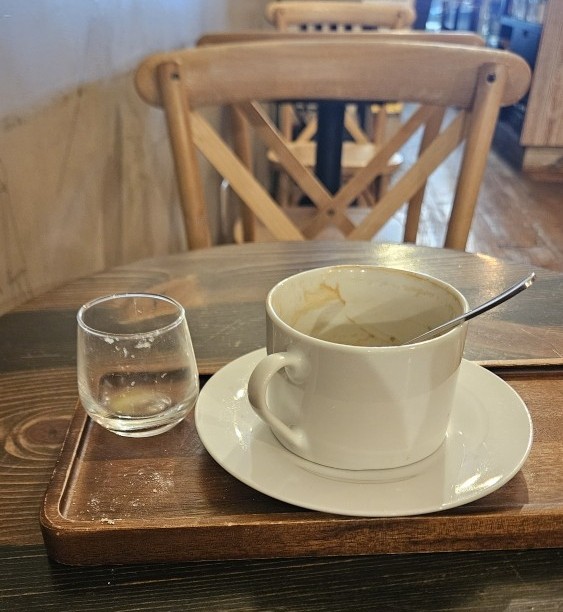
A poster for a bygone event is now a work of art  decorating a French cafe.

Lithographs were created as commercial art. They were made as accessible reproductions of famous works by famous artists.

They were utilitarian or they proselitized, or they were affordable, or they were mementos.

Poster House shows the best of these and expounds on their background. It houses a huge variety of these types of artwork.

Poster House displayed political art as well as advertising art at the exhibits I saw.

My first visit to the museum was in tribute to a boss back in the day who started his businesses selling posters via catalog.

Admission is  free on the First Fridays of the month.

It’s a sweet and friendly space. Go and enjoy it.

Music to your ears

You are hard-wired to react to music. We all are.

This is a neurological fact.

Music is what we, or rather our forefathers, used to communicate before they developed language.

You might think of song as words before words were formed.

This is amazing, as is the theory you will hear about in the video linked above.

Music releases dopamine.

It can help alleviate pain.

Music can stimulate memory as well.

It can mitigate the effects of Parkinson’s.

It also helps with other neuro- degenerative diseases.

Professor Daniel Levitan will tell you more in his conversation at StarTalk.

In the pod

Huddling with podcasts has become a source of comfort for me. I spend a part of my respite time under earphones and tuned to one of these specific three.

At the moment, that rotation is led by Julia Louis Dreyfus. I am caught up on Wiser than Me, which gladdens me (I have been enriched), and I can’t wait for Wednesday.

Anderson Cooper offers wisdom on grieving; perversely, I find tremendous uplift in listening to All There Is with…. I am far from done with the seasons of this series.

Somehow, Brooke Shields snuck on to my listening cycle. On Now What? she interviews people who have dealt with moments of transition. (Who hasn’t?) These shared pivotal moments are  enlightening.

I found myself listening to one of the most distinctive voices the other day. [Bebe Neuwirth has a special timbre when she speaks.]

I appreciate her work as a dancer and actress, but I love her for a moment at a Broadway Cares event some 4 years ago.

The audience was instructed “cell phones off.” A routine command in the theater. Within minutes, a phone went off. 

Ms. Neuwirth rose to the occasion in righteous outrage admonishing the offender.

I hate hearing ringing during a performance, don’t you?

Apparently, she and I are in sync on this one.

Is Forrest Gump just looking for El Dorado?

What’s something you believe everyone should know.

We’ve seen Candide at least a couple of times. If by “seen,” you count the back rows of the Theatre, which is still occupied by Wicked for these dozen plus years. The stage is away aways from the topt’o the house there.

We saw Grand Hotel with Cyd Charisse uptop, too. Even from that height, she had spectacular legs.

I digress a bit, but yes, everyone should be aware of Ms. Charisse’s beauty in her Bway debut at age 70 and the steep incline that defines the Gershwin Theatre’s  seating capacity.

Candide was led by Jim Dale and a newly minted Jason Daniely and featured Arte Johnson. Its music is by Leonard Bernstein with some additional Sondheim songs.

Like Forrest, Candide falls into a series of adventures [well mis- adventures].

His naïveté, [well their naïveté] creates the disconnect between how unsettling things are and their happy-go-lucky reactions.

The best of all possible worlds” offers many upsets to the hero [well heroes] of these picaresques

In Gump’s best world, “life is like a box of chocolates.”

Two views, two famous lines. Two innocents abroad.

M.C.N.Y.

Sing it to the tune of .. yeah you guessed it.

When you tell people you plan a visit to the Museum of the City of New York, they usually have a positive response.

My friend M said something to the effect of , “I love that place.” You get the drift.

I loved the Manny Vega exhibit. That especially, but there was a lot to like in every gallery.

So, a chance to enjoy tea [and crumpets?] with a curator just seemed like a perfect lunchtime activity.

One such event passed us by on the 2nd (with Sarah Henry), and The Curator’s Cup: Afternoon Tea with Sarah Seidman is on Oct 22nd, aka this Tuesday.

I am intending on attending the November 19th. I look forward to The Curator’s Cup: Afternoon Tea with Lilly Tuttle.

Language please

In every transaction, we humans have created specific languages. The vocabularies of business are a case in point. The language of love is another [and very, very different] one.

Let’s address the business model first. I worked in marketing, to be exact, direct mail marketing. The language was one that addressed [see the pun and move on] the needs of our industry.

We were busy targeting audiences and anticipating percentages of response. It’s been ages, so I have lost mastery of what all we were on about.

Your banker and realtor have business vocabularies linked to returns. It’s likely that you’ll always be intetested in % in any biz.

Lawyers no doubt understand tort and litigation as I, for one, do not.

My doctor had better have some knowledge of arcana not easily accessible to me.

All of this is conducted in English,  by the way. [If you’re Catholic, your priest may be reverting to Latin, although it’s as likely not.] So, under an umbrella of English, we have little pools of business dialects. As it were.

Just sharing the obvious for you to elaborate.

r-e-s-pectfully

Not everyone treats the months with as much reverence as we do.

In Spanish, for instance, there are no caps introducing their names. September is just an ordinary noun (except if it starts the sentence). Nothing exalted about septiembre.

It’s interesting because some languages put lots of regular words on pedestals. German is an example along with our own germanic tongue.